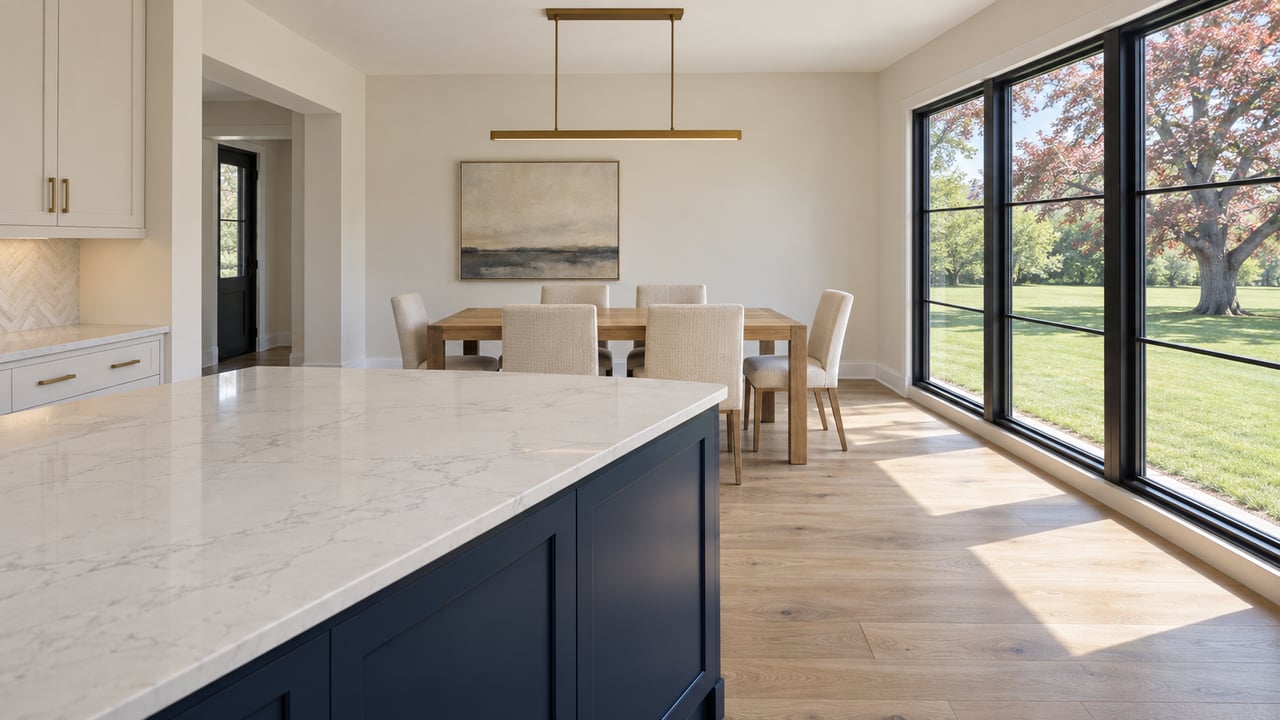
Paramus's Tax Advantage Was Built on Retail. Retail Is Becoming Apartments.
"Just look at our surrounding towns," Mayor Christopher DiPiazza told TapInto Paramus last winter. "Many residents pay double, and in some cases nearly triple, what we pay in property taxes." He wasn't exaggerating for effect. On an $850,000 home, Paramus owners pay somewhere around $12,665 a year, a bill that would run considerably higher a few towns over in Ridgewood, Fair Lawn, or River Edge.
Buyers comparing Bergen County towns hear that gap and assume it reflects thrift, some quirk of municipal budgeting Paramus has figured out that its neighbors haven't. It doesn't. The advantage comes from what's parked next to the residential streets: roughly $13 billion in total assessed property value, with 42 percent of it sitting in commercial real estate, according to the mayor's own figures reported by TapInto Paramus. Four regional malls and their surrounding retail carry a disproportionate share of the tax levy, which is precisely why the residential share stays light.
That structure isn't static. It's being rebuilt in real time, on the same parking lots that generate the subsidy.
Paramus runs a rolling reassessment, revaluing property annually rather than on the multi-year cycle some New Jersey towns use. The borough's own reporting shows the tax rate falling from 1.499 percent, the lowest in a decade, to an estimated 1.415 percent this year, with DiPiazza telling TapInto that half of Paramus homes are projected to see an actual decrease even after updated assessments. The stated goal, in his words, is ensuring commercial properties are captured at their true value so the burden keeps shifting away from residents.
That's the mechanism working as designed, in a year when the commercial tax base is still overwhelmingly retail. The open question is what happens to that mechanism once a meaningful slice of the borough's commercial acreage stops being retail and starts being someone's apartment.
Paramus has spent decades as, in local coverage, the region's undisputed shopping destination. Three of its best-known mall properties are now mid-transformation, and none of the projects are speculative renderings. They have general contractors, groundbreakings, and posted completion windows.
None of these projects are erasing commercial square footage outright. Modera is adding retail alongside its apartments, and Russo is planting a corporate headquarters, itself a commercial ratable, on the same campus as its residential building. What's changing is the mix: land that generated commercial tax revenue as parking lots and department stores is now generating a combination of commercial and residential value on the same footprint, for the first time in the borough's modern history.
The framing that's dominated coverage of these projects treats them as a retail survival story: malls adapting to online shopping by adding housing on top of their footprint. That's true, and it's the story NJBIZ and most trade coverage have told about the $300 million Garden State Plaza expansion.
It's a different story if you're pricing a house three streets from Paramus Park Mall and comparing your future tax bill to a similar home in Glen Rock or Ridgewood. The commercial-to-residential ratio that keeps Paramus bills lower than its neighbors' assumes the commercial side keeps carrying roughly the same share of the total levy it does today. That assumption has never had to hold through a construction cycle that adds nearly a thousand new residential units to town at once. Whether new mixed-use buildings pull their weight the way a fully retail mall did, or whether the ratio softens as apartments enter the base, isn't something the borough's public reassessment figures have addressed yet. It's a live variable, not a settled fact, and it's worth tracking over the next few assessment cycles rather than assuming today's 1.415 percent rate is a fixed feature of buying in Paramus.
| Metric | Figure | Window |
|---|---|---|
| Effective tax rate | 1.415% (est.), down from 1.499% | Current reassessment cycle |
| Total assessed value | Over $13 billion | Per borough figures, reported 2026 |
| Commercial share of assessed value | 42% | Per borough figures, reported 2026 |
| Sample bill, $850,000 home | ~$12,665/year | Per Mayor DiPiazza, reported by TapInto |
| Median sale price | $1.2 million, up 7.5% year over year | Three months ending May 2026 |
| Days on market | 79 days, up from 60 | May 2026 vs. May 2025 |
| Homes sold | 50 | May 2026 |
| Median list price | $1.34 million | July 2026 |
Multiple listing service data covering April 2025 through March 2026 puts total closed sales at 199 homes, with more than 100 of those closing above $1 million, a concentration that has held even as days on market stretched out this spring.
If the tax gap between Paramus and its neighbors is part of what's pulling you toward it, treat that gap as tied to a base that's mid-renovation, not a fixed municipal feature. A few practical steps:
Ask for the property's assessment history, not just its current bill. A reassessment cycle that's actively reshaping the commercial ledger is exactly the kind of environment where last year's number and next year's number can diverge more than usual.
Watch the completion dates on Vermella Paramus and Modera Garden State Plaza against the borough's next reassessment notices, which typically arrive by mid-February. The first full tax year with these buildings fully occupied and assessed will be the real test of whether the commercial share holds near 42 percent or moves.
Compare like construction eras when you're pricing a home against Ridgewood or Glen Rock. A Paramus home built in the same decade, on a similar lot, is the only fair comparison, and your tax bill's stability depends more on what happens two miles away at the mall than on anything happening in your own yard.
Does the mall redevelopment mean my Paramus taxes will go up? The public reassessment data available now shows the rate moving down, not up, and half of homes are projected to see a decrease this cycle. Nothing in the current record suggests an increase tied specifically to the apartment construction. The honest answer is that the long-term effect on the commercial-to-residential ratio hasn't played out yet, since the buildings aren't fully occupied or assessed.
Is Paramus the only Bergen County town with this kind of commercial subsidy? Paramus's concentration of large-format retail, four major mall properties in one borough, is unusual for the county. Most neighboring towns carry a smaller commercial base relative to their residential stock, which is a large part of why their residential rates run higher even with similar municipal budgets.
When will we actually know how this shakes out? The clearest signal will come once Vermella Paramus and the first phase of Modera Garden State Plaza are fully leased and appear on a completed assessment roll, likely in the 2027 or 2028 cycle given Modera's projected mid-2028 completion for that phase.
Property tax mechanics rarely make it into a home tour, but they shape what a monthly payment actually looks like five years into ownership. If you're weighing Paramus against another Bergen County town and want a clearer read on how a specific property's assessment history lines up with what's happening at the mall corridor, reach out to The Klipper Group for a market conversation grounded in the town's actual numbers, not just this year's rate.
This article is general information, not legal, tax or financial advice. Consult a qualified professional about your situation.
Stay up to date on the latest real estate trends.
Start your journey towards your dream home today! Subscribe now for exclusive access to expert insights, insider tips, and the latest property listings. Don't miss out on the opportunity to make informed real estate decisions. Subscribe to our newsletter now!