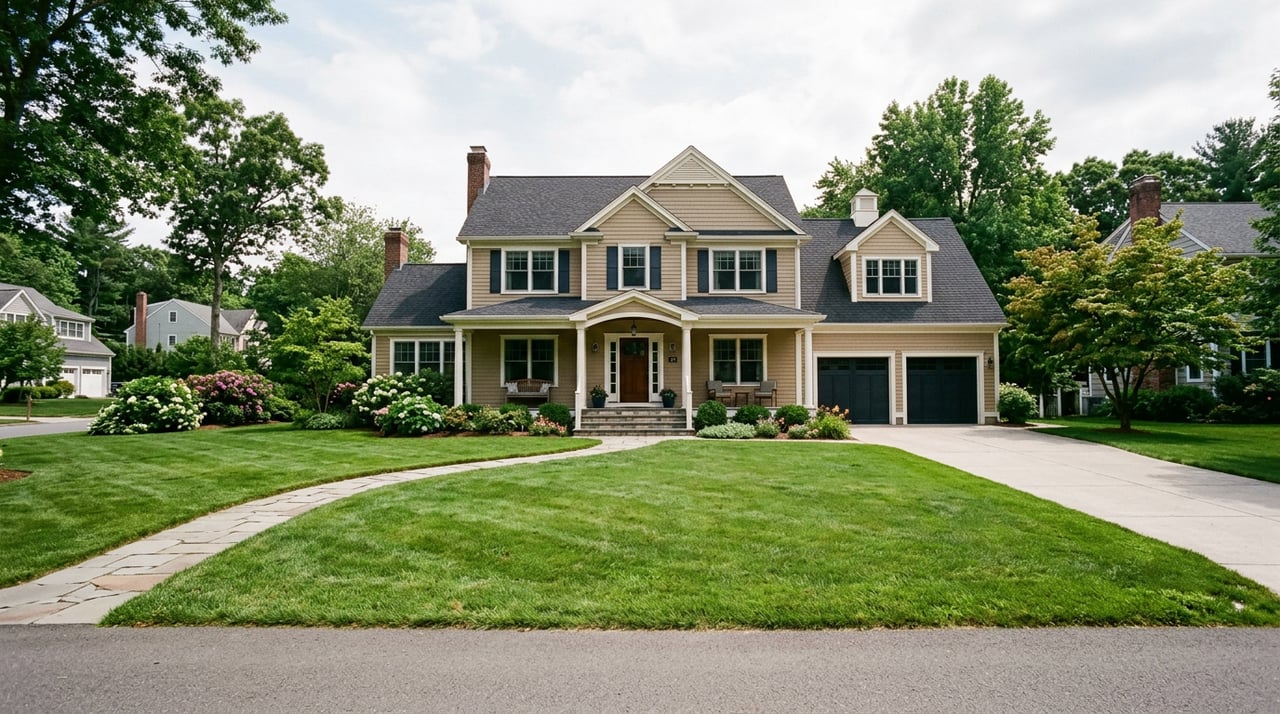
Wyckoff's Median Price Just Crossed New Jersey's New Mansion Tax Line
A Wyckoff seller pricing a home this fall is working from different math than the seller who listed the same house eighteen months ago. Not because the market moved. Because the tax code did.
For twenty years, New Jersey's so-called mansion tax was a buyer's problem. A flat 1 percent, paid at closing, on anything over a million dollars. Sellers in Wyckoff rarely thought about it because it never touched their side of the settlement sheet. That changed on July 10, 2025, when the state's fiscal year 2026 budget rewrote the fee entirely, renamed it the Graduated Percent Fee, and handed the bill to the seller. The timing matters here in a way it doesn't in every town, because Wyckoff's own median list price in August 2026 sat at $1.12 million, just above the exact line where this fee begins to apply.
That's not a coincidence a seller can afford to shrug off. It means a meaningful share of homes moving through Wyckoff this season are crossing a threshold that used to be irrelevant to them and is now a real line item at closing.
Before July 10, 2025, the rule was simple: buyer pays 1 percent on anything over $1 million, flat. After that date, the obligation shifted to the seller, and the rate stopped being flat. It now scales with price, from 1 percent up through 3.5 percent, and it applies to the full sale price rather than just the amount over the threshold.
That second detail is the one that catches people off guard. A seller closing at $1.2 million doesn't pay 1 percent on $200,000. They pay 1 percent on the entire $1.2 million.
There was a narrow grace period for contracts signed before the cutover. If a contract was fully executed before July 10, 2025 and the deed recorded on or before November 15, 2025, the seller could apply to the Division of Taxation for a refund of anything paid above the old 1 percent rate. That window is closing. The refund claim has to be filed within one year of the deed's recording date, which means anyone whose deed recorded close to that November deadline is running out of time to file, right now, in the final months of 2026.
| Sale Price Range | Graduated Percent Fee Rate |
|---|---|
| $1,000,000.01 – $2,000,000 | 1% |
| $2,000,000.01 – $2,500,000 | 2% |
| $2,500,000.01 – $3,000,000 | 2.5% |
| $3,000,000.01 – $3,500,000 | 3% |
| Above $3,500,000 | 3.5% |
Look at where the jumps happen. Every rate applies to the whole price, not the marginal slice above the line, so the boundaries between tiers behave less like a slope and more like a cliff.
Take a sale at exactly $2,000,000. It falls in the 1 percent band, so the fee is roughly $20,000. Now take the same house selling for $2,010,000, ten thousand dollars more. That price crosses into the 2 percent band, and the fee is calculated on the entire $2,010,000, not just the portion above $2 million. The fee jumps to roughly $40,200. The seller picked up $10,000 in extra price and lost about $20,000 in extra fee. Net, they're worse off by roughly $30,000 for accepting a higher offer.
That is not a rounding error. That is a pricing decision that now has to be modeled before a home ever hits the market, not discovered after an offer arrives.
Most Wyckoff transactions aren't happening at $2 million. They're happening near the first line, not the fourth one. With the town's median list price at $1.12 million as of August 2026, and homes spending a median of just 18 days on market that same month, a large share of ordinary Wyckoff sales, not just the luxury tier, are now crossing the $1 million mark where the Graduated Percent Fee starts.
A year ago, a seller in that price range paid nothing under this fee. The buyer did. Today, that same $1.12 million sale carries a Graduated Percent Fee of roughly $11,200, owed entirely by the seller, on top of the standard Realty Transfer Fee that sellers have paid since 1968. That's a cost that simply didn't exist on the seller's side of the ledger for a typical Wyckoff transaction before last July.
The upper end of town isn't exempt from the cliff effect either. Newer construction in the Sicomac section, larger properties near the Hartung section, and homes zoned to Lincoln School routinely list well above $1.3 million, with some approaching the $2 million band where the rate doubles. For those sellers, the pricing conversation isn't just what the market will bear. It's whether a list price that invites offers just over $2 million costs more in fee than it gains in price.
An escalation clause or a bidding situation can push a sale across one of these thresholds without anyone pausing to run the numbers until the settlement statement is already in front of them.
Anyone working from a net sheet built before July 2025 is working from the wrong number.
That line matters because it's not hypothetical. Sellers and even some advisors are still circulating pre-2025 estimates that assume the buyer covers this fee. They don't anymore.
None of this replaces a conversation with a real estate attorney about your specific contract and closing date. The rates and exemptions are set by the state, but how they apply to your transaction is worth confirming before you sign anything.
Does this apply if my home sells for under $1 million? No. The Graduated Percent Fee only applies once the consideration exceeds $1 million. Below that, there's no supplemental fee, just the standard Realty Transfer Fee that's existed since 1968.
I'm already under contract from before the change. Does the old rule apply to me? It depends on your contract and recording dates. If your contract was fully executed before July 10, 2025 and your deed recorded on or before November 15, 2025, the old 1 percent buyer-paid structure applies, and any amount paid above that can be claimed back from the state within one year of recording.
Can my buyer and I just agree to split it differently? The state holds the seller legally responsible for the fee at recording, but buyers and sellers remain free to negotiate who actually bears the cost in the contract itself. That's a private agreement between the parties, not something the Division of Taxation will interpret for you.
Pricing a Wyckoff home this season means pricing around a line that didn't exist for sellers a year ago. Getting that number right before the listing goes live, not after an offer arrives, is the difference between a clean closing and a five-figure surprise at the settlement table.
If you're weighing a listing in Wyckoff and want a pricing strategy that accounts for where these thresholds actually fall, The Klipper Group can walk through the numbers with you and build a plan around your specific price point, not a generic one.
Stay up to date on the latest real estate trends.
Start your journey towards your dream home today! Subscribe now for exclusive access to expert insights, insider tips, and the latest property listings. Don't miss out on the opportunity to make informed real estate decisions. Subscribe to our newsletter now!